
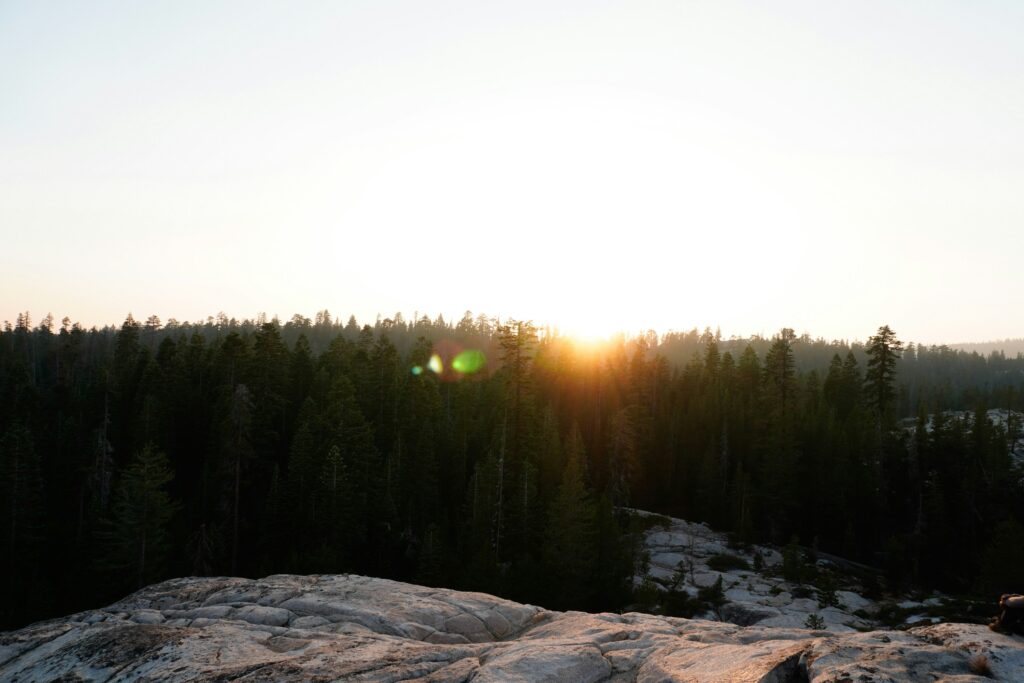
Highlights from the High Sierra
The Sierra Nevada isn’t just a spot on a map it’s a rhythm you return to, in every season. With elevations that swing from flower filled meadows to icy peaks, it offers a hard to match mix of solitude, challenge, and sheer beauty.
In winter, the backcountry feels otherworldly. Silent, snow draped slopes give seasoned trekkers a quiet not found elsewhere just you, the crunch of snow underfoot, and endless sky. Come spring, trails start to open up around lower elevations. Streams roar with meltwater, flowers sneak through soil, and crowds are still weeks away. It’s a brief but sweet pocket of wilderness most miss.
Then summer hits. High passes become passable, and long routes show off granite spires, alpine lakes, and glacier scoured valleys under endless sun. Fall closes the loop gently, painting aspen in gold and giving hikers one last quiet gasp before snow returns.
Whether you’re in for the sweat or the scenery, the High Sierra gives back what you put in and then some. It’s why serious backpackers keep coming back, season after season.
For routes built to match any season, head to the full high sierra backpacking guide.
Spring Routes: Melting Trails & Quiet Moments
Spring in the Sierra is not for everyone, but for those willing to meet the season on its own terms, it delivers unmatched solitude and spectacle. Snow lingers, creeks swell, and the crowds haven’t yet packed the trailheads. If you’re ready to embrace soggy socks and chilly mornings, here are two routes that shine before summer really starts cooking.
Rae Lakes Loop: bridges and blooms before the crowds
This classic loop out of Roads End hits differently in May and early June. The footbridges are still intact from seasonal prep, alpine meadows begin to carpet with glacier lilies and shooting stars, and the rustle of pre tourist peace surrounds you. With fewer boots on trail, chances are good you’ll camp alone beside iconic lakes still rimmed in snow.
Be aware: the higher passes like Glen may still be under snow. Microspikes and trekking poles aren’t optional they’re your lifeline. Start early, take creek crossings seriously, and keep an eye on afternoon melttrends.
Hetch Hetchy to Tiltill Valley: waterfall season at its best
While Yosemite Valley is elbow to elbow with spring break hikers, Hetch Hetchy remains uncrowded and flowing at full throttle. The trail to Tiltill Valley gives you multiple falls Wapama, Rancheria at their roaring peak, plus early wildflowers lining quiet switchbacks.
The elevation stays lower than other Sierra routes, so there’s less snow trouble here than higher trails. Still, boggy meadows and stream fed trails will test your waterproofing.
Gear tips for melting snow and soggy trails
Spring routes demand gear that handles wet, cold, and unpredictable. A few must haves:
High ankle boots with real waterproofing not marketing fluff
Gaiters to block muck and late snow patches
A solid foam sleeping pad (wet ground is unforgiving)
Quick drying base layers and warm, compact insulation
Dry bags or trash compactor bags inside your pack to protect sleeping gear
It’s not about ultralight. It’s about staying dry, steady, and smart. The Sierra in spring is raw and rewarding for those who pack like they mean it.
Summer Routes: Peak Access and Alpine Glory
Summer in the Sierra Nevada means open trails, clear skies, and long days perfect conditions for exploring the region’s high alpine gems. With snow mostly melted and trail access at its best, these routes showcase the range’s iconic granite landscapes and vibrant ecosystems.
Evolution Basin via Piute Pass
Known for its striking granite terrain and glassy alpine lakes, this route offers a quintessential High Sierra experience. The trail climbs gradually through Humphreys Basin before dropping into Evolution Basin a stunning landscape of sculpted peaks and meadows.
Trailhead: North Lake near Bishop
Highlights: Golden Trout lakes, wide open basins, Muir Pass nearby
Best for: Experienced hikers ready for multi day immersion
Yosemite’s Vogelsang Loop
One of Yosemite’s best kept summer secrets, the Vogelsang Loop delivers scenic ridgelines, alpine meadows, and panoramic views with fewer crowds than Yosemite Valley.
Trailhead: Tuolumne Meadows
Highlights: Vogelsang Lake, Rafferty Creek, and Emeric Lake
Best for: Hikers looking for moderate challenge and classic Yosemite scenery
Maximize Daylight: Start Smart, Pack Right
With longer daylight hours, you can cover more trail but early starts are still your best friend in the mountains. Afternoon storms are possible, especially in July and August.
Keep these tips in mind:
Start early: Beat the heat and avoid weather surprises
Pack light but smart: Sun protection, extra layers, and water filtration are essential
Don’t forget bear proof storage: Required in many Sierra zones
Long, golden days in the High Sierra are short lived make the most of them by choosing routes that match your pace and preparation.
Autumn Routes: Fall Color and Fewer Footsteps

If you want quiet trails and golden light, fall in the Sierra delivers. Start with Mono Pass to Pioneer Basin an out and back that pays off early and often. Expect bursts of crimson groundcover, granite lined meadows, and lakes still enough to mirror the sky. It’s not overrun, but it’s not barren either a good balance for those who want some solitude without disappearing.
Further south, the Mineral King Loop winds deep into golden aspen country, where the trees practically glow. You’ll earn your views with steady elevation but get high alpine hush in return. Late season marmots, crisp air, and trails free of summer foot traffic it’s the Sierra with the volume turned down.
That said, fall up here isn’t without risk. Early snow can drop fast and without warning. Go light, but don’t skimp on insulation and weather protection. Mornings bite, nights bite harder. If you’re lucky, you’ll beat the snowline. If not, at least you packed like you meant it.
Winter Routes: For the Bold (and Prepared)
When the Sierra Nevada goes quiet under snow, it doesn’t shut down it transforms. For those willing to brave the cold, winter backpacking here offers a kind of solitude hard to find in peak season. Start with something beginner friendly: Carson Pass to Winnemucca Lake. It’s a straightforward 4 mile out and back with wide trails, modest elevation gain, and heavy payout in views. Snowshoe or skin in, watch the sun drop behind Round Top, and understand what people mean when they talk about winter magic.
For the experienced, Desolation Wilderness in winter is a different animal. If you’ve trained for snow camping and know how to assess conditions, pushing deeper maybe toward Lake Aloha or the Velmas can feel like walking across another planet. But risks pile up fast: exposure, route finding, and unstable snowpack aren’t forgiving.
Which brings us to the non negotiables: know your avalanche zones. Carry a beacon, probe, shovel and know how to use them. Layering isn’t about comfort; it’s survival. That means moisture wicking base layers, active insulation like fleece or synthetics, and hardshells that block wind and wet snow. Footwear needs to be waterproof, breathable, and warm enough for hours of snow travel.
In winter, you’re not just escaping the crowds. You’re taking on a challenge that rewrites the rules of backcountry travel. Respect it, prep for it, and if you’re going to do it do it right.
Planning Essentials
Backpacking in the Sierra Nevada isn’t just about fitness and gear it’s about prep. And that starts with permits. Many of the top trails, especially in national parks and wilderness areas, require wilderness permits. Quotas at trailheads fill up fast, so book early or be ready to pivot to lesser known routes. In summer, popular spots like Yosemite and Whitney Zone often require lottery wins. Off season? Still check: some permits are year round.
Next, make sure you can navigate without a signal. Phones die, maps get soaked, and trail signs vanish in snow. Bring a paper topo map and compass, and learn to use them. GPS devices like the Garmin inReach or Gaia GPS with offline maps are smart, but don’t rely on one tool. Backup matters out there.
And Leave No Trace isn’t just picking up after yourself. It’s camping 200 feet from water, packing out TP and micro trash, and learning how to store food so bears don’t get bold. The Sierra’s beauty depends on trail users not acting like tourists. Going above and beyond the basics is the standard now not the exception.
Want More Iconic Trails?
Whether you’re mapping out your first alpine loop or looking to upgrade your backcountry game, there’s always a new trail to discover in the Sierra Nevada.
Dive Deeper:
For detailed itineraries, seasonal gear insights, and expert tips on making the most of your time in the High Sierra, head to the full guide below:
High Sierra Backpacking Overview Must Do Loops
This resource covers:
Route breakdowns by experience level and season
Key highlights, camping zones, and elevation profiles
Pro tips from trail tested hikers
A Final Reminder:
Stay curious every route teaches you something new
Stay safe weather shifts fast in the Sierra
Stay smart pack light, plan well, and respect the land
Backcountry adventure is waiting, all year long.
 There is a specific skill involved in explaining something clearly — one that is completely separate from actually knowing the subject. Robertong Stanleyer has both. They has spent years working with trail prep and packing tips in a hands-on capacity, and an equal amount of time figuring out how to translate that experience into writing that people with different backgrounds can actually absorb and use.
Robertong tends to approach complex subjects — Trail Prep and Packing Tips, Hidden Gems, Outdoor Exploration Basics being good examples — by starting with what the reader already knows, then building outward from there rather than dropping them in the deep end. It sounds like a small thing. In practice it makes a significant difference in whether someone finishes the article or abandons it halfway through. They is also good at knowing when to stop — a surprisingly underrated skill. Some writers bury useful information under so many caveats and qualifications that the point disappears. Robertong knows where the point is and gets there without too many detours.
The practical effect of all this is that people who read Robertong's work tend to come away actually capable of doing something with it. Not just vaguely informed — actually capable. For a writer working in trail prep and packing tips, that is probably the best possible outcome, and it's the standard Robertong holds they's own work to.
There is a specific skill involved in explaining something clearly — one that is completely separate from actually knowing the subject. Robertong Stanleyer has both. They has spent years working with trail prep and packing tips in a hands-on capacity, and an equal amount of time figuring out how to translate that experience into writing that people with different backgrounds can actually absorb and use.
Robertong tends to approach complex subjects — Trail Prep and Packing Tips, Hidden Gems, Outdoor Exploration Basics being good examples — by starting with what the reader already knows, then building outward from there rather than dropping them in the deep end. It sounds like a small thing. In practice it makes a significant difference in whether someone finishes the article or abandons it halfway through. They is also good at knowing when to stop — a surprisingly underrated skill. Some writers bury useful information under so many caveats and qualifications that the point disappears. Robertong knows where the point is and gets there without too many detours.
The practical effect of all this is that people who read Robertong's work tend to come away actually capable of doing something with it. Not just vaguely informed — actually capable. For a writer working in trail prep and packing tips, that is probably the best possible outcome, and it's the standard Robertong holds they's own work to.